Towards the art of loving: what male loneliness is really asking for
What bell hooks can teach us about love, masculinity and political belonging
Last weekend, videos of women (and a few men) dancing on tables across Australian pubs to Triple J’s Hottest 100 number one, Olivia Dean’s Man I Need, filled my feed. A total of five tracks from Dean’s second album, The Art of Loving, made the top 100, with an impressive three in the top 20. Other notable entries concerned with the topic of romance included Raye’s Where The Hell Is My Husband at number five, and Keli Holiday’s Dancing2 at number two, controversially dedicated to his famously feminist girlfriend.

Keli Holiday and Abbie Chatfield
Beyond the sheer joy of the song, Man I Need’s victory felt like a light-hearted reprieve from a feed recently dominated by a very different narrative: the claim that women’s retreat from romance is responsible for the so-called “male loneliness epidemic.” The Hottest 100 chart result seems, if nothing else, to complicate this increasingly mainstream narrative. It suggests that women - or at least the young Australian women who make up the majority of Hottest 100 voters - are not turning away from men or love altogether. Rather, they are reimagining what kinds of love, and what kinds of men, are worth dancing for.
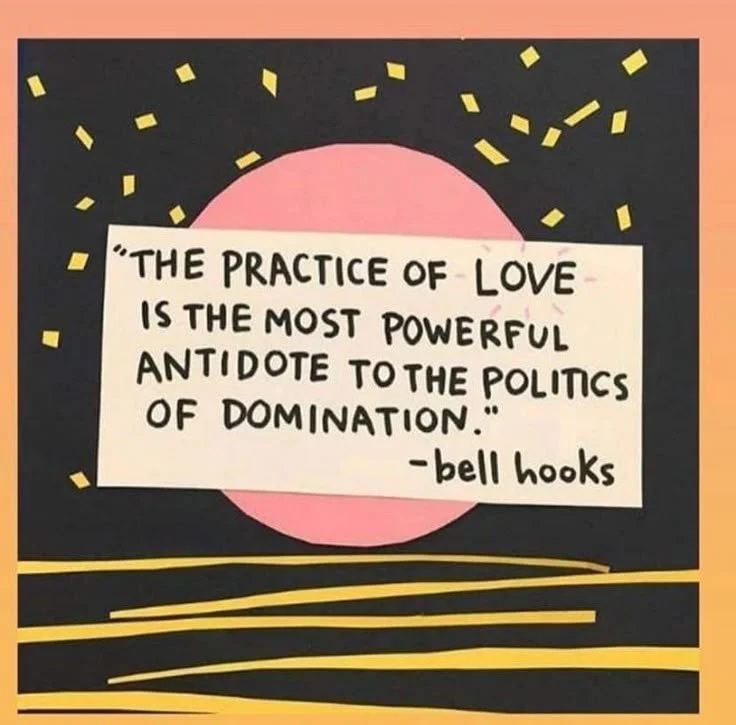
bell hooks would not be surprised by this contradiction. In The Will to Change, she argues that patriarchy does not simply oppress women; it also wounds men by teaching them that vulnerability, emotional openness and relational care are signs of weakness. Men, she writes, are socialised into emotional illiteracy - trained to dominate rather than connect, to perform strength rather than practise love. From this perspective, the “male loneliness epidemic” is not a mystery produced by women’s choices, but a predictable outcome of patriarchal masculinity itself.
What’s striking, then, is where young women are directing their romantic and political energies. Beyond music, their votes increasingly flow toward left-wing movements led by charismatic and emotionally articulate men who speak in the language of care, community and togetherness. In the recent New York mayoral election, the social-powered “Hot Girls for Zohran” campaign did more than mobilise voters for Zohran Mamdani: it rendered him desirable not in spite of his politics, but because of them. Empathy, solidarity and social justice became attractive.
Meanwhile, in the UK, Mamdani-esque Green Party leader Zack Polanski is racing up the polls. Zack recently invited musician and public figure Jordan Stephens onto his podcast ‘Bold Politics' to discuss politics and masculinity. Stephens remembers that as a millennial boy conversations were often ‘anti-love’, with demonstrations of affection being feared or laughed at. In contract, on-screen heroes often demonstrated a ‘lone wolf’ or ‘entrepreneurial’ hyper-individualism that disconnected them from their communities. Both Polanski and Stephens agree that their experience of love as adults has offered them a level of support that would be transformative at a community-wide level - capable of shaping a politics that is inclusive and compassionate rather than divisive and punitive. This is precisely what hooks describes in All About Love, where she defines love not as sentimentality, but as an ethic: a combination of care, commitment, knowledge, responsibility and respect. Love, in her view, is deeply political.
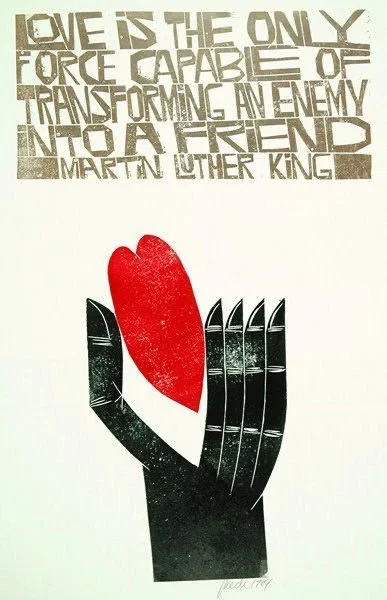
Seen through this lens, the apparent contradiction between a “male loneliness epidemic” and a culture saturated with love songs, love politics and love-driven campaigning begins to make sense. The loneliness being diagnosed is not simply the absence of romantic access to women, but the absence of a social order that allows men to be fully human - emotionally expressive, mutually dependent, capable of giving and receiving care.
This helps explain why the discourse around male loneliness often emerges most forcefully from a very particular political terrain: spaces where young men are increasingly voting for parties like Reform UK, drawn toward a reactionary politics that promises restored status, hierarchy and control rather than connection. Patriarchy, hooks reminds us, seduces men by offering power as a substitute for intimacy. But power does not cure loneliness - it entrenches it.
The challenge, then, is not to shame men for feeling isolated, nor to blame women for refusing to accommodate harmful forms of masculinity, but to invite men into a different story altogether. A story where love is not feminised, ridiculed or treated as apolitical, but recognised as a radical practice - one that demands emotional courage, mutuality and unlearning domination.
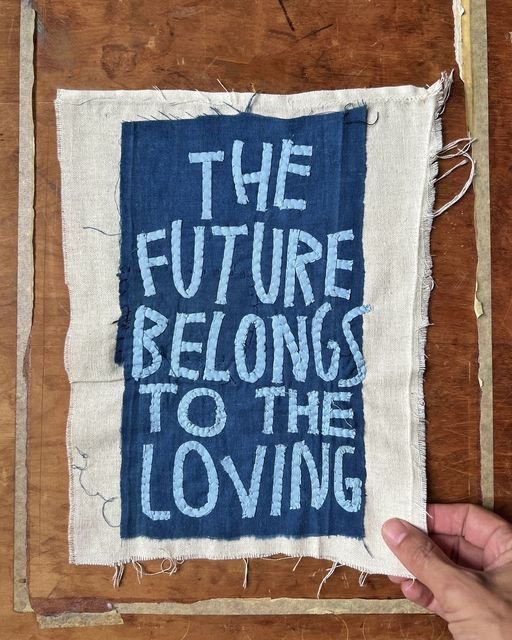
If music charts and youth politics are any indication, many young women are already living inside that story. They are not withdrawing from romance; they are refusing versions of it that replicate inequality and emotional austerity. They are voting, dancing and organising around a vision of love that feels expansive rather than constricting.
Perhaps the way forward for those caught in the narrative of male loneliness is not through grievance or nostalgia for lost hierarchies, but through an invitation: to join a politics of love, where masculinity is no longer defined by distance and dominance, but by presence, care and connection. Only then might more men come to understand - and practise - the true art of loving.
