The grammar of belonging: how English keeps us disconnected from nature
What Indigenous writers can teach us about where the distance we feel from nature comes from, starting with grammar itself.
On one of my first dates after moving to Sydney, a Spanish man walked me home via his favourite street in our new shared neighbourhood.
It was lined with twisting, weeping fig trees, their dark leafy canopy cooling the sun-drenched path we wandered down. We kept glancing up at them with the kind of quiet amazement that new places — and new romances — can spark.
We leaned against a hollow in one of the trunks, letting the weight of the magical looking tree hold us for a moment - until a man with a torch hurried us along.
Almost two years later, I walked out of my apartment to see a neighbouring tree wearing a sign from Council:
“This tree has been identified for removal as part of a streetscape upgrade, which will include planting 60 new trees and creating a bike lane. Please write to Council within 14 days with any concerns, after which this tree will be removed.”
This tree has lived on my street for as long as I have, and likely for decades longer — providing shade from the Sydney summer sun and shelter from year-round rain for me, my friends, my neighbours, and countless passers by.
A few days later, in the strange way Instagram works, I saw a video of a young man standing next to a tree marked for the same fate in New York. He joked that “she must be shaking in her boots.”
I mean — imagine being told you have just fourteen days to live, with your only hope of survival resting on whether the people around you care enough to speak up.
Decades of quietly witnessing morning walks, late-night taxi drop-offs, dog walks and breakup conversations — suddenly reduced to a planning notice and a countdown.
Standing in front of that council notice, I realised how easily we speak about trees as if they are objects of infrastructure rather than fellow residents of the places we live.
A “streetscape upgrade.”
“Removal.”
“Replacement planting.”
Language that makes the loss feel administrative rather than alive.
In my last piece, I wrote about the story of exile from the garden — the quiet way it may have taught us to imagine ourselves as separate from the living world. Perhaps moments like this show what that separation looks like in practice.
Native American scientist and writer Robin Wall Kimmerer, takes this idea even further.
In Braiding Sweetgrass, she argues that the distance we feel from nature is partly embedded within the structure of the English language itself.
English reserves pronouns of personhood — he, she, they — almost exclusively for humans.
Everything else becomes “it.”
But in many Indigenous languages, plants, animals and landscapes are treated grammatically as living beings rather than objects.
In Potawatomi, for example, words often function as verbs rather than nouns — expressions closer to “to be a hill” or “to be a bay”.
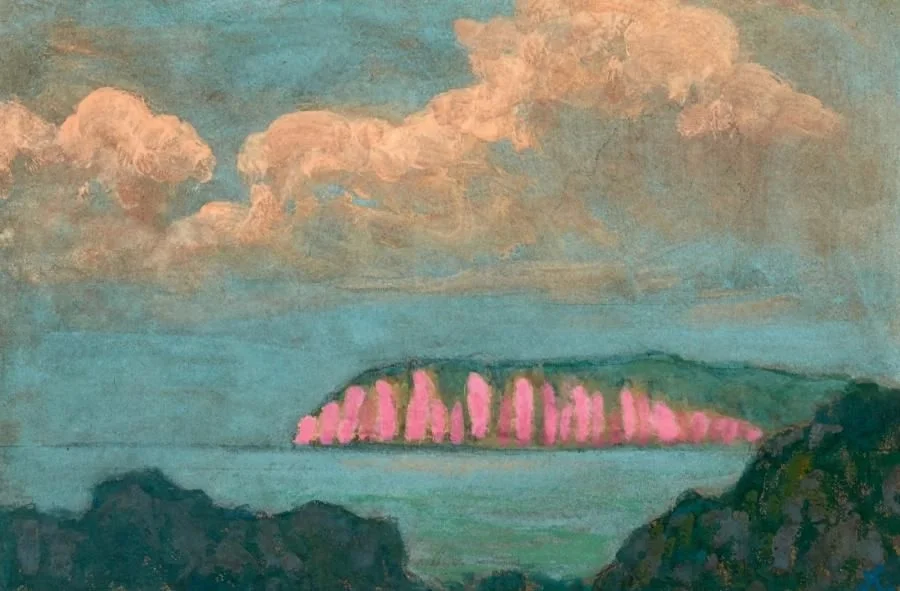
Jean-François Auburtin, les falaises roses
In English we tend to describe the world as things.
In these languages, the world is something alive and happening.
Kimmerer writes:
“Saying ‘it’ makes a living land into natural resources. If a maple is an ‘it’, we can take up the chainsaw. If the maple is ‘she’, we have to think twice.”
In Robin Wall Kimmerer’s world, trees are characters within the community — the “giant leaders” — offering gifts to us every day. Shade that saves energy on hot summer afternoons. Maple that sweetens the pancakes that power our mornings. Wood that keeps homes warm through winter.
In this telling, trees are not background scenery or raw materials. They are elders within the neighbourhood of life.
When you begin to see the living world this way, the story changes.
The forest becomes a gathering of ancient relatives.
And the trees on our streets become quiet witnesses to the lives unfolding around them.
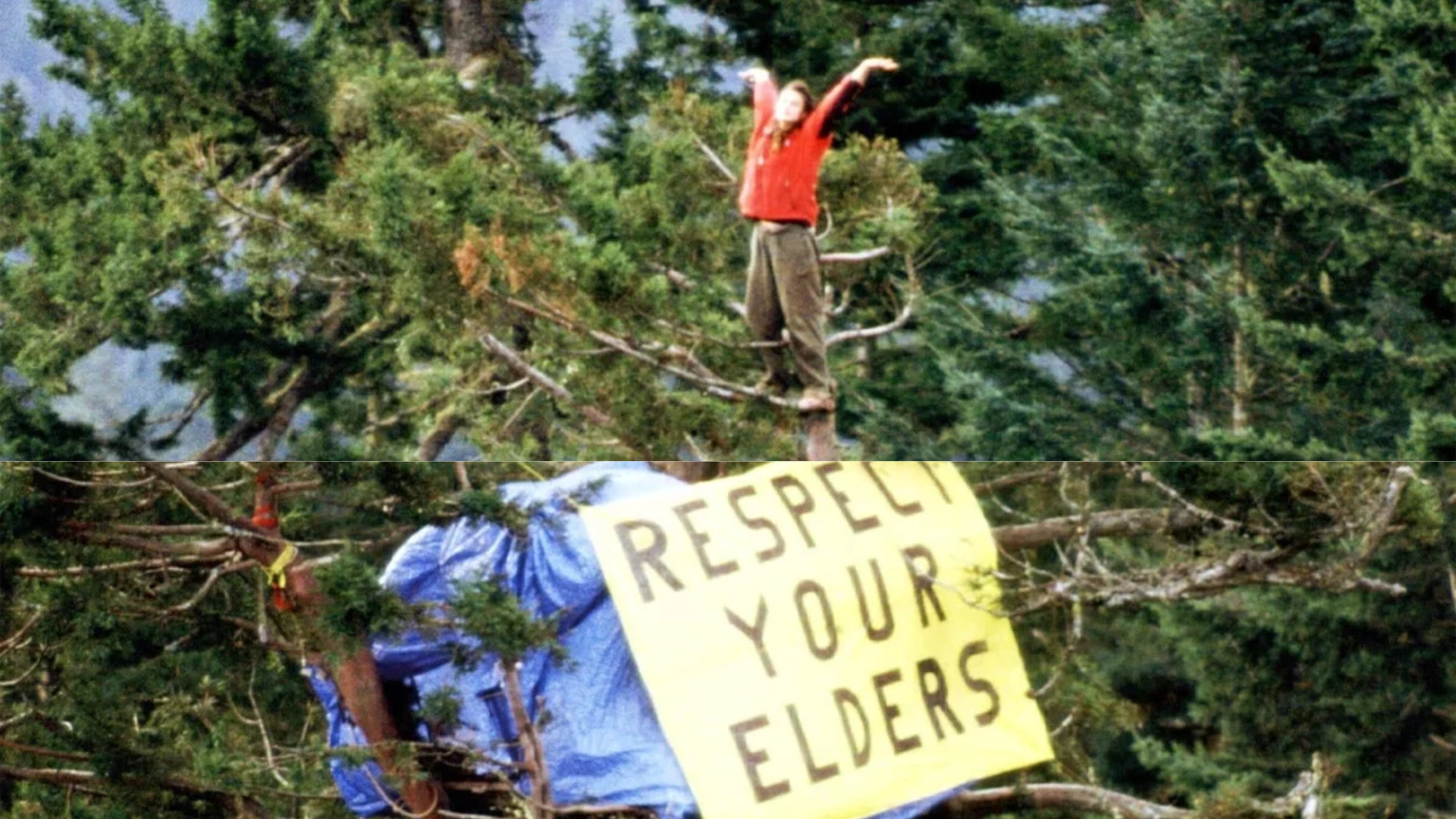
Maybe the work of leaving exile behind is not about returning to a mythical garden, but about learning to tell a different story about the one we are already in.
A story where humans are not the only protagonists.
A story where the maple, the river, the soil and the street tree all have speaking roles.
And where, if we listen carefully enough, we might begin to remember that we were never meant to be the only characters in the garden.
Perhaps the future of our relationship with the Earth begins when we stop treating the living world as scenery — and start recognising it as a cast of characters we share the story with.
