community chorus
one shared story, told in a hundred local voices
The insight
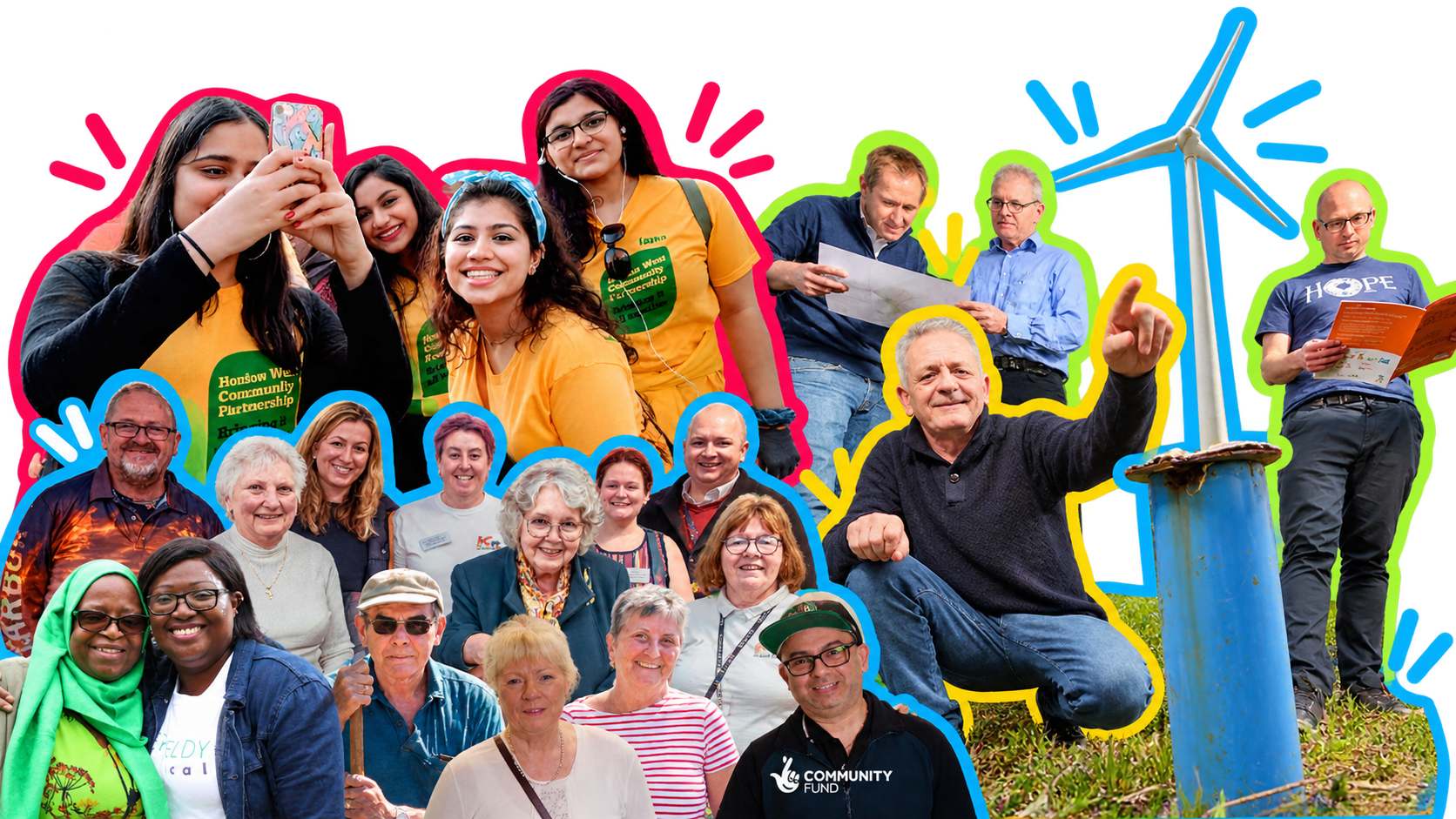
At Local Trust, part of my job was to turn what I learned from Big Local communities into case studies, guides, and content to share across the network.
Looking back, I became interested in a contradiction: if communities were the source of the knowledge, why was the institution so often the one telling their story?
The stories were true and positive, but Local Trust remained the narrator and communities the subject. It reflects a wider habit in institutional communications: extract the learning, package the message, distribute it back out.
What changes if the institution stops being the storyteller and starts creating the conditions for communities to author a shared narrative themselves?
The idea
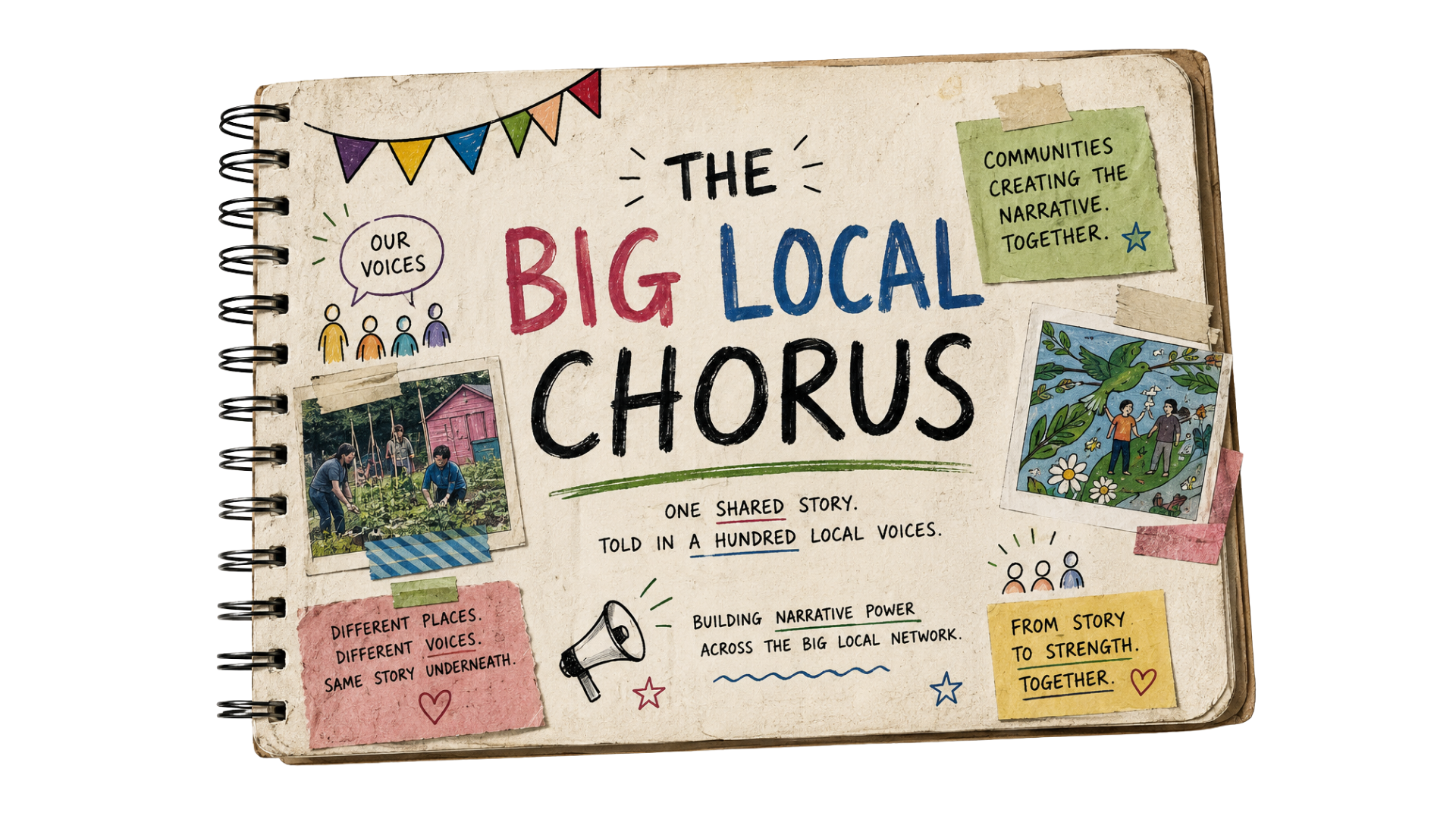
Community Chorus brings communities together to identify the dominant stories told about them — left behind, deprived, disengaged, dependent — and the alternative story their own experience demonstrates.
Together, they create a shared narrative repertoire: a chorus rather than a script.
Every community can then express that underlying story in its own creative language — film, mural, spoken word, music, local press, photography or food.
The aim isn't message consistency. It's narrative consistency beneath creative diversity: many different stories that add up to the same worldview.
The activation
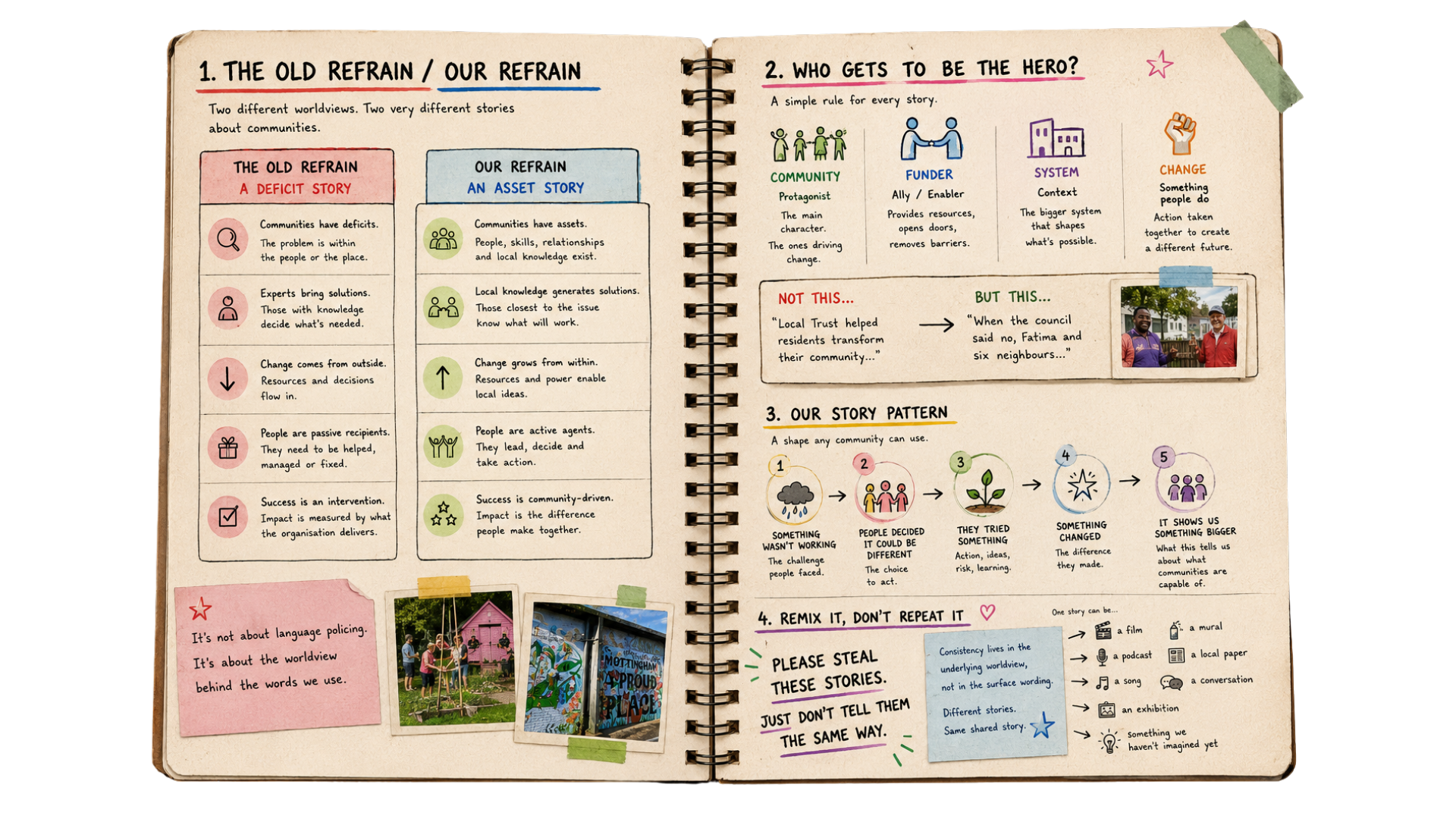
It starts with The Big Local Chorus Book — not a conventional messaging guide, but a living resource created with the network.
It maps the old refrain against the new; establishes a simple principle: the community is the protagonist, the funder an ally, and the system the context; and offers adaptable story patterns rather than approved wording.
Then comes a story of now: a neighbourhood is described as "left behind", a regeneration scheme is announced, a high street closes.
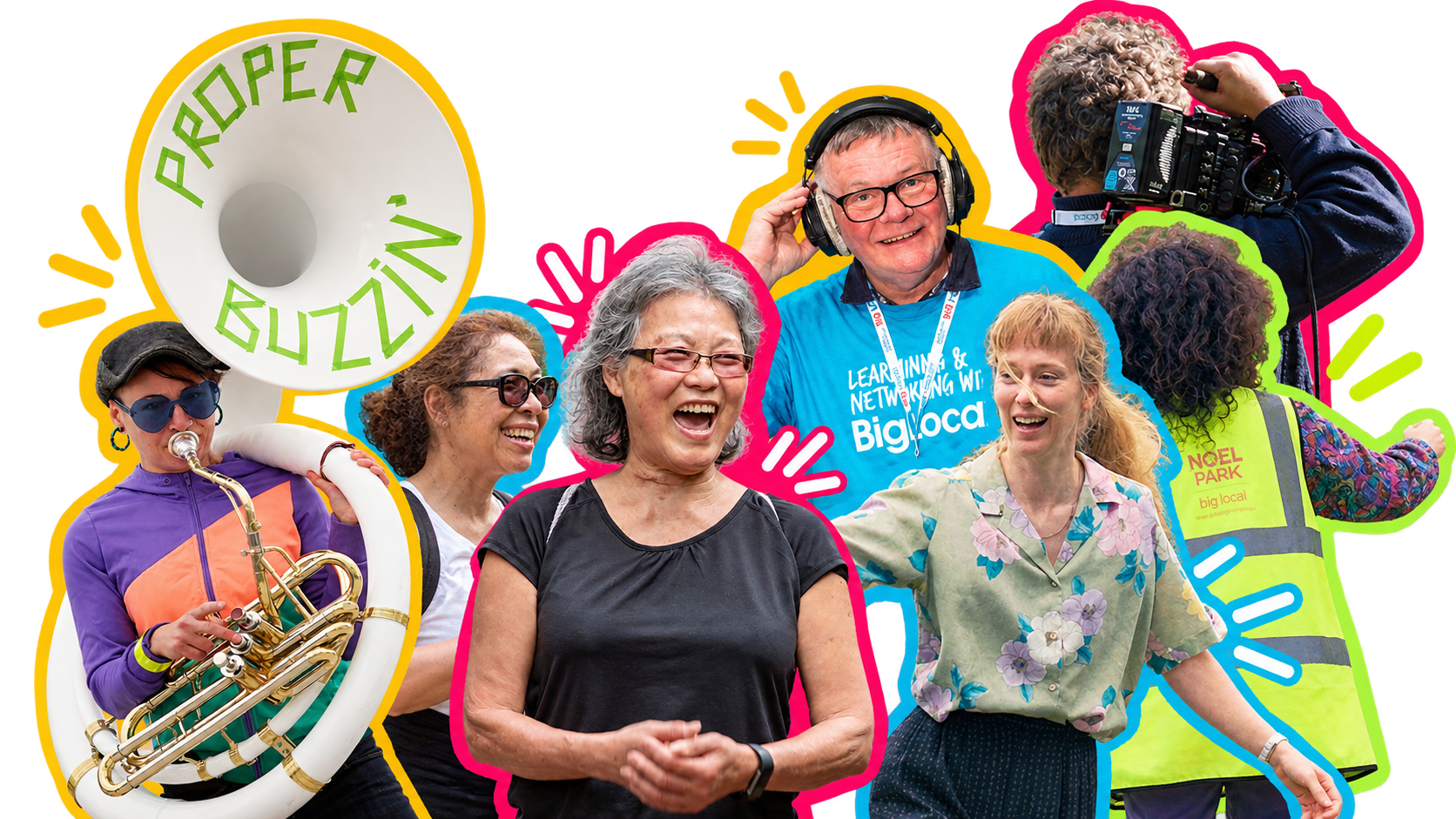
Instead of one organisation issuing a response, communities draw on the shared repertoire to respond in their own ways, from a documentary and a mural to a community newspaper and a photography exhibition.
Placed together, they don't look like one campaign. They look like many people who agree on something.
The shift
I'd test whether:
communities feel the shared narrative represents their experience;
participants begin expressing compatible ideas without being given identical messaging;
communities can identify and reframe dominant narratives themselves;
the same worldview travels across different voices, places and creative forms.
The legacy
Community Chorus asks what communications practice becomes when its role shifts from
author to facilitator.
Rather than extracting stories from communities, institutions can help build the relationships, shared values, and creative confidence that allow people to shape the stories told about them.
The goal isn't message consistency. It's narrative power.